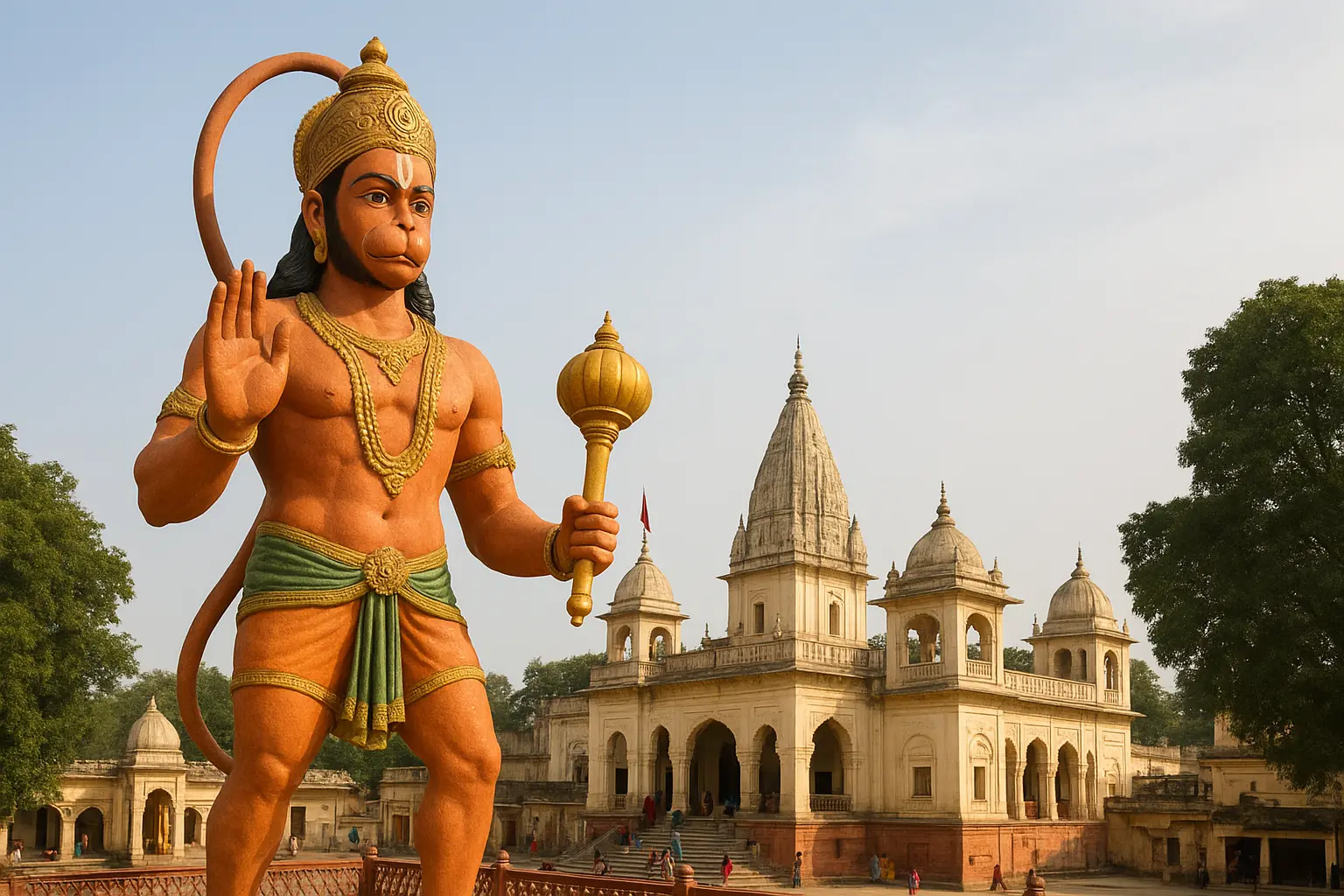
History, and Complete Guide to Your Spiritual Trip to Ayodhya
Welcome to my comprehensive blog post on the Kanak Bhawan Temple in Ayodhya! If you’re searching for “Kanak Bhawan Temple timings,” “Kanak Bhawan Aarti schedule,” or planning a full temple trip to this divine abode, you’ve come to the right place. As a spiritual enthusiast who has visited Ayodhya multiple times, I’ll cover everything you need to know about this iconic temple dedicated to Lord Rama and Goddess Sita. From its rich history and stunning architecture to practical details like how to reach, best time to visit, nearby attractions, and essential tips for visitors, this guide is your one-stop resource for an unforgettable Kanak Bhawan Temple trip.
This golden palace, often called Sone-ka-Ghar, attracts pilgrims seeking blessings and spiritual solace. Known for its rich history and vibrant rituals, it’s a must-visit for anyone exploring Ayodhya temples.
Kanak Bhawan Temple Timings and Aarti Schedule
Planning a visit to Kanak Bhawan Temple? Knowing the timings is crucial for a smooth darshan. The temple adjusts its schedule seasonally to accommodate weather and devotee flow.
| Event | Summer Timings (Apr–Oct) | Winter Timings (Nov–Mar) |
|---|---|---|
| Temple Opening | 5:00 AM | 5:30 AM |
| Mangala Aarti | 5:10 AM | 5:40 AM |
| Shringar Aarti | 7:00 AM | 7:30 AM |
| Rajbhog Aarti | 12:00 PM | 12:00 PM |
| Temple Closes (Noon) | 12:30 PM | 12:30 PM |
| Temple Reopens | 4:00 PM | 4:00 PM |
| Sandhya Aarti | 6:30 PM | 6:00 PM |
| Shayan Aarti | 8:30 PM | 8:00 PM |
| Temple Closing | 9:00 PM | 8:30 PM |
These timings ensure devotees can participate in rituals without rush. Always check for any festival-related changes, as crowds peak then.
Kanak Bhawan Temple timings are designed for accessibility, drawing thousands yearly.
During festivals like Ram Navami (Lord Rama’s birthday in March/April) or Diwali, the Aarti timings may extend, and special rituals are performed. Note that entry is free, but donations are appreciated for maintenance. For the latest updates in 2025, check official sources or apps like Divya Ayodhya, as timings can adjust due to events.
Notes on Timings:
- Always confirm on arrival, as festivals can alter schedules.
- Queues are longer post-Ram Mandir inauguration, so plan for 30-60 minutes wait.
- Photography is allowed outside but restricted during Aarti.
Aarti Schedule at Kanak Bhawan Temple
The aarti at Kanak Bhawan Temple is a highlight, filling the air with chants and devotion. Multiple aartis occur daily, varying by season.
In summer, aarti timings are 8:00 AM, 11:30 AM, 7:00 PM, and 9:30 PM. The morning ones set a serene tone, while evening aartis glow with lamps and bhajans.
Winter aarti schedule includes 8:30 AM, 12:00 PM, 6:30 PM, and 9:00 PM. These sessions allow devotees to witness the idols’ adornment and offer prayers.
If you’re planning your Kanak Bhawan Temple Aarti schedule, participating in the evening Aarti is highly recommended—it’s when the temple glows with lamps, and the energy is palpable.
“There is no deity more powerful than time.” – From the Ramayana, emphasizing the importance of timely devotion.
History of Kanak Bhawan Temple
Kanak Bhawan Temple’s origins trace back to ancient legends. According to folklore, Queen Kaikeyi gifted this palace to Goddess Sita right after her marriage to Lord Rama. It served as their private abode in Ayodhya. Over centuries, the temple has been rebuilt multiple times.
In the Dvapara Yuga, Lord Rama’s son Kush first constructed it. Later, King Rishabh Dev renovated it. Even Lord Krishna is said to have visited during his era. In historical times, Emperor Chandragupta II of the Gupta Empire built the structure around the 4th century AD. His successor, Samudragupta, further enhanced it in 387 AD.
Tragedy struck in 1027 AD when Nawab Salarjung II Ghazi destroyed it. But devotion prevailed. In 1891 AD, Maharaja Pratap Singh and Maharani Vrishabhan Kunwari of the Bundela Rajput dynasty rebuilt it in its current form. Today, the Sri Vrishbhan Dharma Setu Trust manages the temple, preserving its legacy.
This history makes Kanak Bhawan Temple a symbol of resilience and faith in Ayodhya.
“As Lord Rama said in the Ramayana, ‘Where there is righteousness, there is victory.’ This echoes the enduring spirit of Kanak Bhawan Temple through ages of destruction and rebirth.”
Architecture of Kanak Bhawan Temple
The architecture of Kanak Bhawan Temple showcases the elegant Bundelkhand style, making it one of Ayodhya’s most beautiful structures. The temple resembles a grand palace with intricate carvings and a golden sheen that lives up to its name, meaning “Golden Palace.”
At the center lies a spacious hall with arched doorways on three sides, inviting devotees inward. The sanctum sanctorum houses three pairs of idols of Lord Rama and Goddess Sita, each crowned in gold. The largest pair was installed by Maharani Vrishabhan Kunwari, the medium-sized by King Vikramaditya, and the smallest by Lord Krishna himself, gifted to a meditating hermit.
The idols are adorned with opulent gold ornaments under a silver roof, creating a mesmerizing sight. Walls feature detailed frescoes depicting scenes from the Ramayana, adding to the spiritual ambiance. The overall design blends royalty with divinity, reflecting the temple’s royal gift origins.
Visitors often marvel at how the architecture transports them to the era of Lord Rama’s rule in Ayodhya.
Planning Your Kanak Bhawan Temple Trip: How to Reach Ayodhya
Reaching Kanak Bhawan Temple is straightforward, thanks to Ayodhya’s improved connectivity. Located in the heart of the city, the temple is easily accessible once you’re in Ayodhya.
By Air: The Maharishi Valmiki International Airport in Ayodhya is now operational, with flights from major cities like Delhi, Mumbai, and Kolkata. From the airport, it’s a 10-15 minute drive (about 8 km) to the temple via cab or auto-rickshaw. Alternatively, fly into Lucknow’s Chaudhary Charan Singh International Airport (130 km away) or Gorakhpur Airport (140 km), then take a taxi or bus.
By Train: Ayodhya Junction or Faizabad Junction connects to all major Indian cities. Trains like the Vande Bharat Express from Delhi make it convenient. From the station, the temple is just 2-3 km—opt for a cycle rickshaw for an authentic experience.
By Road: Ayodhya is well-linked via national highways. From Lucknow (2-3 hours), Varanasi (4-5 hours), or Prayagraj (3-4 hours), buses and taxis are plentiful. Self-drive options are ideal if you enjoy road trips through Uttar Pradesh’s scenic routes.
Once in Ayodhya, local transport like e-rickshaws or walking (if staying nearby) gets you to Kanak Bhawan. For a hassle-free trip, book through apps or local guides.
Key Points for Reaching:
- Budget Tip: Use UPSTC buses for economical travel.
- Luxury Option: Hire a cab from Lucknow for door-to-door service.
- Accessibility: The temple area is pedestrian-friendly but can be crowded; wear comfortable shoes.
Best Time to Visit Kanak Bhawan Temple
The “best time to visit Kanak Bhawan Temple” is from October to March, when temperatures range from 8°C to 25°C, making sightseeing comfortable. Winters offer a pleasant climate for exploring Ayodhya’s temples without the summer heat (which can hit 40°C+ from April to June).
Festivals enhance the experience:
- Ram Navami (March/April): Celebrates Rama’s birth with grand Aartis and processions.
- Diwali (October/November): Ayodhya lights up, symbolizing Rama’s return.
- Monsoon (July-September): Avoid if possible due to rain, but it’s less crowded.
If you’re visiting in 2025, align with post-monsoon for fewer tourists and vibrant festivities.
What to Do During Your Kanak Bhawan Temple Visit
A typical Kanak Bhawan Temple trip starts with darshan of the idols, followed by participating in Aarti. Offer flowers, sweets, or coconuts at the altar—prasad is distributed post-rituals. Spend time meditating in the halls, absorbing the chants and bhajans.
Explore the temple premises: Walk around the courtyards, admire the carvings, and perhaps join a kirtan session. If time allows, attend storytelling sessions by priests about Rama-Sita legends.
For a full day: Combine with Saryu Aarti at the nearby ghat in the evening.
“If Rama makes a promise, then He fulfills it without missing. Rama has no need to say two times. Once is enough.” – From Valmiki’s Ramayana.
Nearby Attractions in Ayodhya
No Kanak Bhawan Temple trip is complete without exploring nearby sites:
- Ram Janmabhoomi (500m): The birthplace of Rama, now home to the grand Ram Mandir.
- Hanuman Garhi (500m): A hilltop temple dedicated to Hanuman, offering panoramic views.
- Sita Ki Rasoi (1km): Believed to be Sita’s kitchen, showcasing ancient utensils.
- Ram Ki Paidi (2km): Sacred ghats on the Saryu River for bathing and evening Aarti.
- Nageshwarnath Temple (1.5km): Dedicated to Shiva, with mythological ties to Rama.
These spots are walkable or a short rickshaw ride away, making a 1-2 day itinerary feasible.
Tips for Visitors: Making Your Trip Memorable and Respectful
To ensure a smooth Kanak Bhawan Temple trip:
- Dress Code: Wear modest clothing—cover shoulders and knees; women should carry a dupatta.
- Etiquette: Remove shoes before entering; maintain silence during prayers.
- Crowd Management: Visit early morning or weekdays to avoid rushes.
- Health & Safety: Stay hydrated; use sanitized facilities.
- Shopping: Buy souvenirs like Rama-Sita idols or sweets from nearby markets.
- Accommodation: Stay in dharamshalas or hotels like Taraji Resort for proximity.
- Eco Tip: Avoid plastics; support local vendors.
Notes for First-Timers:
- Carry ID for security checks near Ramkot.
- Download the Divya Ayodhya app for real-time updates.
- If traveling with elders, opt for wheelchair-accessible paths.
Key Points Summary:
- Must-Do: Attend Evening Aarti for divine vibes.
- Avoid: Peak summer visits without precautions.
- Budget: Entry free; allocate ₹500-1000 for transport and offerings.
Personal Reflections and Conclusion
Visiting Kanak Bhawan Temple isn’t just a trip—it’s a soul-stirring experience that reconnects you with ancient wisdom. From the golden idols gleaming under lights to the rhythmic Aarti chants, every moment feels blessed. As I reflect on my last visit, the peace I felt during darshan lingers, reminding me of Rama’s ideals.
Whether you’re searching for “Kanak Bhawan Temple timings 2025” or planning a full Ayodhya itinerary, this guide covers it all. Pack your devotion, respect the sanctity, and let the divine energy guide you. Jai Siya Ram!
FAQs About Kanak Bhawan Temple Timings and Aarti Schedule
1. What are the opening and closing timings of Kanak Bhawan Temple?
Kanak Bhawan Temple in Ayodhya opens early in the morning at 5:00 AM during summer (April to October) and at 5:30 AM during winter (November to March). The temple remains open until 12:30 PM in the afternoon, closes for a short break, and then reopens at 4:00 PM. In the evening, it closes at 9:00 PM during summer and at 8:30 PM in winter after the Shayan Aarti.
2. When is the best time to visit Kanak Bhawan Temple?
The best time to visit Kanak Bhawan Temple is during the early morning Mangala Aarti or the evening Sandhya Aarti when devotional chants and the temple’s atmosphere are at their peak. Winter months (November to February) offer a pleasant climate for visitors.
3. What are the Aarti timings at Kanak Bhawan Temple?
The main Aartis at Kanak Bhawan include Mangala Aarti around 5:10 AM (summer) or 5:40 AM (winter), Shringar Aarti at 7:00 AM (summer) or 7:30 AM (winter), Rajbhog Aarti at 12:00 PM, Sandhya Aarti at 6:30 PM (summer) or 6:00 PM (winter), and Shayan Aarti at 8:30 PM (summer) or 8:00 PM (winter).
4. Is Kanak Bhawan Temple open every day?
Yes, Kanak Bhawan Temple is open to devotees every day of the week, including weekends and public holidays. However, timings for Aartis and darshan remain the same regardless of the day.
5. Is there any entry fee for visiting Kanak Bhawan Temple?
No, there is no entry fee for visiting Kanak Bhawan Temple. Devotees can attend darshan and Aartis free of cost. Donations are voluntary and go towards temple maintenance and religious activities.
6. Can visitors attend all Aartis at Kanak Bhawan Temple?
Yes, visitors can attend all Aartis at Kanak Bhawan, but it’s advisable to arrive 10–15 minutes early to find a good place, as the temple can get crowded during major Aartis, especially in the morning and evening.
7. How long does darshan take at Kanak Bhawan Temple?
On normal days, darshan at Kanak Bhawan takes around 20–30 minutes. During festivals like Ram Navami or Diwali, the temple sees a large influx of devotees, and darshan may take an hour or more.
8. Are there any special Aarti timings during festivals?
Yes, during major Hindu festivals such as Ram Navami, Diwali, and Janmashtami, Kanak Bhawan Temple may hold special Aartis and extend darshan hours. Devotees are advised to check with the temple authorities before visiting during such occasions.
9. What is the history behind Kanak Bhawan Temple?
Kanak Bhawan, meaning ‘Golden Palace,’ is dedicated to Lord Rama and Goddess Sita. According to legend, it was gifted to Sita by Queen Kaikeyi after her marriage to Lord Rama. The temple is famous for its golden idols and intricate architecture.
10. Where is Kanak Bhawan Temple located and how to reach it?
Kanak Bhawan Temple is located in the heart of Ayodhya, Uttar Pradesh, near Hanuman Garhi. Visitors can reach it via road, rail, or air. The nearest railway station is Ayodhya Junction, and the nearest airport is Maharishi Valmiki International Airport.