


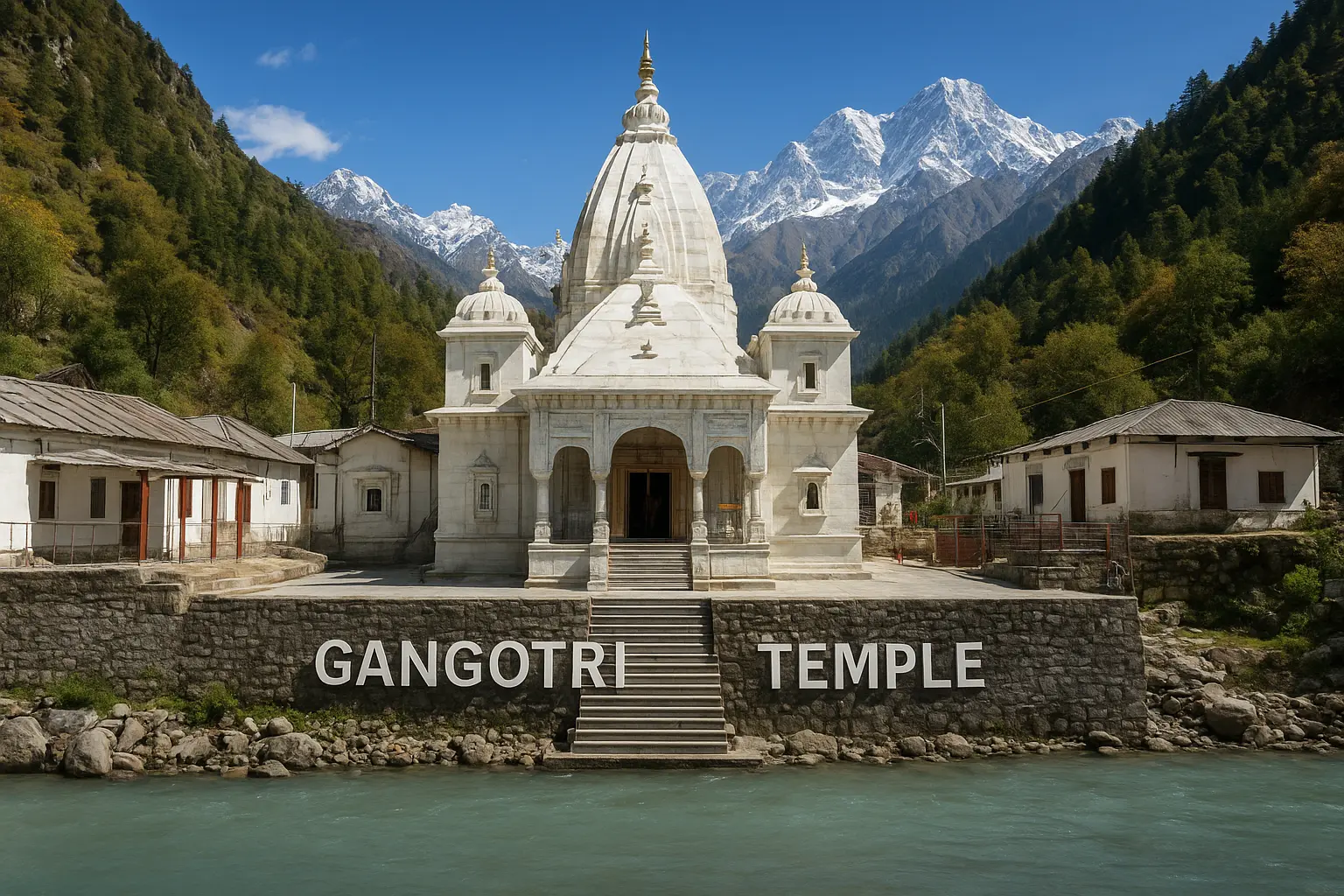
Your Ultimate Guide to a Sacred Pilgrimage
Introduction to the Sacred Gangotri Temple
The Gangotri Temple, nestled in the pristine Garhwal Himalayas of Uttarakhand, India, is a revered sanctuary dedicated to Goddess Ganga, the embodiment of the sacred River Ganges. As a pivotal site in the Char Dham Yatra, it draws millions seeking spiritual cleansing and divine blessings. For pilgrims planning a visit in 2025, understanding the Gangotri Temple timings and Aarti schedule is crucial for a fulfilling experience. Located at an altitude of approximately 3,100 meters, the temple offers a serene backdrop of snow-capped peaks and the gushing Bhagirathi River, considered the Ganges’ source.
This comprehensive guide covers the temple’s seasonal operations, daily darshan hours, and mesmerizing Aarti ceremonies, ensuring you can plan your journey with ease. Whether you’re a first-time visitor or a seasoned devotee, this post provides all you need to know about Gangotri Temple opening time 2025, Aarti timings, and more, blending spiritual insights with practical tips.
Notes: Check weather updates before travel, as landslides may disrupt access. Pack warm clothing even in summer due to high altitude.
Gangotri Temple Timings and Aarti Schedule
Gangotri Temple, dedicated to Goddess Ganga, opens daily for devotees with specific darshan and aarti timings. Knowing the exact schedule helps pilgrims plan their visit smoothly and experience the divine atmosphere without hassle.
| Particulars | Timings |
|---|---|
| Temple Opening Time | 6:15 AM |
| Morning Aarti | 6:30 AM – 7:30 AM |
| Darshan Hours (Morning) | 7:30 AM – 2:00 PM |
| Bhog/Naivedya Offering | 12:00 PM |
| Temple Closes (Afternoon) | 2:00 PM – 3:00 PM |
| Reopens for Darshan | 3:00 PM |
| Evening Aarti | 7:30 PM – 8:30 PM |
| Temple Closing Time | 9:30 PM |
Keypoints:
- Opening: April 30, 2025 (Akshaya Tritiya).
- Closing: October 23, 2025 (post-Diwali).
- Seasonal operation to avoid winter extremes.
- Ceremonial events mark opening and closing.
Notes:
- Arrive 15-30 minutes early for smoother darshan. Special darshan tickets may be available for priority entry.
- Verify dates closer to your visit via official Uttarakhand tourism websites, as minor shifts may occur. Winter worship shifts to Mukhba Temple.
- Photography during Aarti is restricted; focus on the experience. Festival Aartis require advance planning for space.
“Not only River Ganga gives moksha to the devotee but River Ganga also feels happy to touch the feet of devotees. It is vise versa in between devotee and River Ganga.” – Ancient Hindu Proverb
Gangotri Temple Opening and Closing Dates 2025
Seasonal Access to the Holy Shrine
The Gangotri Temple operates seasonally due to harsh Himalayan winters, with opening and closing dates set by auspicious Hindu calendar events. For 2025, the temple is expected to open on April 30, during Akshaya Tritiya, a day symbolizing eternal prosperity. It will close on October 23, post-Diwali, when snowfall renders the area inaccessible. These dates influence the Gangotri Temple timings and are critical for Char Dham Yatra planning. The opening ceremony features grand processions and the first Aarti, while the closing, or ‘Kapat Bandhan,’ sees the idol moved to Mukhba village for winter worship. These events draw significant crowds, so plan accordingly.
Keypoints:
- Opening: April 30, 2025 (Akshaya Tritiya).
- Closing: October 23, 2025 (post-Diwali).
- Seasonal operation to avoid winter extremes.
- Ceremonial events mark opening and closing.
The Mythical and Historical Significance of Gangotri Temple
A Legacy Rooted in Mythology
The history of Gangotri Temple is woven with mythology and devotion, making it a cornerstone of Hindu spirituality. Legend narrates that King Bhagirath’s penance brought the Ganga from heaven to earth to redeem his ancestors’ souls. Lord Shiva tamed the river’s fierce flow in his locks, allowing it to emerge gently at Gangotri. The temple, constructed in the 18th century by Gurkha general Amar Singh Thapa, stands as a testament to this divine narrative. Its simple yet elegant white granite architecture blends with the surrounding glaciers, surviving avalanches and floods, symbolizing divine protection. Knowing this history enriches the experience of Gangotri Temple timings and Aarti schedule, as rituals reflect these ancient tales. In 2025, improved roads from Uttarkashi enhance accessibility, but the temple’s spiritual essence remains timeless.
Keypoints:
- Mythological origin tied to King Bhagirath and Lord Shiva.
- Built in the 18th century by Amar Singh Thapa.
- Survived natural calamities, symbolizing divine protection.
- Enhances understanding of rituals and timings.
Notes: Explore the Mahabharata for deeper insights into the Ganga legend. Photography inside the temple is restricted to preserve sanctity.
“The Ganga to me is the symbol of India’s memorable past which has been flowing into the present and continues to flow towards the ocean of the future.” – Jawaharlal Nehru
How to Reach Gangotri Temple
Planning Your Journey to the Himalayas
Reaching Gangotri Temple requires careful planning due to its remote Himalayan location, about 100 kilometers from Uttarkashi. The journey typically begins from Dehradun or Rishikesh, with options for buses, taxis, or helicopters for quicker travel. For those seeking Gangotri Temple timings 2025, note that the road opens around late April, aligning with the temple’s schedule. The short walk from Gangotri town to the temple is manageable, but the high altitude may cause breathlessness, so acclimatization is advised. En route, picturesque stops like Harsil, known for apple orchards, add cultural charm. Helicopters from Dehradun to Harsil, followed by a short drive, are ideal for time-constrained pilgrims. Aligning your arrival with Gangotri darshan timings ensures a seamless spiritual experience.
Keypoints:
- Located 100 km from Uttarkashi, accessible from Dehradun/Rishikesh.
- Travel options include road and helicopter services.
- Road access opens with the temple in April.
- Short walk to temple; prepare for altitude challenges.
Notes: Book transportation early during peak season (May-June). Follow eco-friendly practices, such as avoiding plastic, along the route.
Sacred Rituals Beyond Aarti
Deepening Your Spiritual Connection
Beyond the Gangotri Temple Aarti schedule, daily rituals like abhishekam (ritual bathing of the idol), bhog (food offerings), and mantra recitations honor Goddess Ganga’s divine descent. Devotees offer Bhagirathi water, believing a dip or Aarti attendance cleanses sins and grants moksha. These rituals align with Gangotri Temple timings, following Aarti sessions, with priests chanting Vedic mantras. The temple’s silver idol of Ganga, adorned seasonally, is a focal point. Pilgrims often extend their journey to Gaumukh, the glacier source, for a holistic experience. Understanding these practices transforms a visit into a transformative pilgrimage.
Keypoints:
- Includes abhishekam, bhog, and Vedic chants.
- Aims for purification and moksha.
- Timed with Aarti and darshan.
- Complements treks to Gaumukh.
Notes: Only vegetarian food is allowed near the temple. Contribute modestly to temple upkeep.
“The ever-lasting divinity of Holy River Ganga – instilled with the purest form of freshness and goodness – thousands of years and still reflecting the same.” – Traditional Saying
Best Time to Visit Gangotri Temple
Choosing the Ideal Season for Your Pilgrimage
The optimal time to visit aligns with the temple’s opening, from May to June for mild weather and vibrant festivals, or September to October for fewer crowds and clear skies. Summers (10-20°C) are ideal for exploration, while monsoons (July-August) risk landslides. Winters are inaccessible due to closure. For Gangotri Temple timings 2025, May-June sees peak crowds, so book accommodations early. This period aligns with the Char Dham Yatra, enhancing the spiritual vibe.
Keypoints:
- Peak season: May-June (festivals, mild weather).
- Shoulder season: September-October (less crowded).
- Avoid: July-August (monsoons), November-April (closed).
- Summer temperatures: 10-20°C.
Notes: Pack rain gear for unpredictable weather. Carry altitude sickness remedies.
Accommodation Options Near Gangotri
Finding a Comfortable Stay
Accommodation near Gangotri ranges from budget guesthouses to ashrams, catering to pilgrims’ needs. Options in Gangotri town, like GMVN Tourist Rest House, offer basic amenities within walking distance of the temple. Harsil, 25 km away, provides scenic stays with hotels like Hotel Monal. Ashrams like Sivananda Kutir offer spiritual retreats with vegetarian meals. For Gangotri Temple timings 2025, book early during peak season (May-June) to secure spots. Eco-friendly stays are encouraged to preserve the Himalayan ecosystem.
Keypoints:
- Options: Guesthouses, ashrams, hotels.
- GMVN Rest House: Budget-friendly, near temple.
- Harsil: Scenic hotels like Monal.
- Book early for peak season.
Notes: Check for Wi-Fi and heating in accommodations. Support local businesses for sustainable tourism.
Nearby Attractions to Enhance Your Visit
Exploring the Himalayan Wonders
Complement your visit with nearby attractions like Gaumukh Glacier, an 18 km trek to the Ganges’ source, blending adventure and spirituality. Kedartal Lake, a high-altitude gem, captivates hikers, while Harsil Valley’s deodar forests offer tranquility. Bhairon Ghati and the Submerged Shivling add mythological depth, aligning with Gangotri Aarti schedule for day trips post-morning darshan.
Keypoints:
- Gaumukh: 18 km trek to Ganges source.
- Kedartal: Scenic lake for trekkers.
- Harsil: Relaxing valley retreat.
- Bhairon Ghati: Mythical sites nearby.
Notes: Secure permits for Gaumukh treks; hire guides. Avoid littering in eco-sensitive zones.
Practical Tips for a Seamless Pilgrimage
Ensuring a Hassle-Free Visit
For a smooth visit, carry ID proofs, stay hydrated at high altitude, and follow queue systems during Gangotri Temple timings. Opt for eco-friendly accommodations, avoid plastics, and consult doctors for elderly pilgrims. Budget for minimal entry fees and offerings. During Aarti, dress modestly and remove shoes to respect traditions.
Keypoints:
- Carry IDs, water, and altitude medication.
- Adhere to queue and dress codes.
- Practice eco-friendly habits.
- Pre-check health for high altitude.
Notes: ATMs are limited; carry cash. Emergency helpline: 108 for ambulances.
Cultural Practices and Etiquette
Respecting Local Traditions
Respecting Gangotri’s cultural practices enhances your pilgrimage. Dress modestly (covering shoulders and knees), remove shoes before entering the temple, and maintain silence during Aarti. Offerings like flowers or coconuts are welcome, but avoid non-vegetarian food or alcohol near the temple. Engaging with local priests or sadhus respectfully can deepen your understanding of Gangotri Temple timings and rituals. Participate in community bhajans for a richer experience.
Keypoints:
- Dress modestly, remove shoes.
- Offerings: Flowers, coconuts acceptable.
- Avoid non-vegetarian food, alcohol.
- Engage respectfully with locals.
Notes: Learn basic Hindi phrases to connect with locals. Avoid loud behavior in sacred spaces.
Environmental Considerations for Pilgrims
Preserving the Himalayan Ecosystem
Gangotri’s fragile Himalayan ecosystem requires eco-conscious travel. Avoid single-use plastics, use reusable water bottles, and dispose of waste responsibly. Support local initiatives like the ‘Clean Ganga’ campaign. For Gangotri Temple timings 2025, plan treks to Gaumukh or Kedartal with guides to minimize environmental impact. Respect wildlife and avoid disturbing natural habitats, ensuring the Ganges remains pristine.
Keypoints:
- Avoid plastics; use reusable bottles.
- Support ‘Clean Ganga’ initiatives.
- Plan treks with eco-conscious guides.
- Respect wildlife and habitats.
Notes: Carry eco-friendly toiletries. Donate to local conservation efforts.
Conclusion: Embrace the Divine Journey
The Gangotri Temple timings and Aarti schedule for 2025 offer a gateway to spiritual rejuvenation amidst the Himalayas’ grandeur. From its mythical origins to daily rituals, every element invites devotion. Plan wisely, immerse in the Ganga’s flow, and let this pilgrimage cleanse your soul.
Frequently Asked Questions (FAQs)
1. What are the opening and closing timings of Gangotri Temple?
Gangotri Temple opens at 6:15 AM and closes at 9:30 PM, with a break in the afternoon from 2:00 PM to 3:00 PM.
2. When is the Morning Aarti performed at Gangotri Temple?
The Morning Aarti at Gangotri Temple is performed daily from 6:30 AM to 7:30 AM.
3. What time is the Evening Aarti at Gangotri Temple?
The Evening Aarti takes place between 7:30 PM and 8:30 PM.
4. Is there any afternoon break for darshan at Gangotri Temple?
Yes, the temple remains closed between 2:00 PM to 3:00 PM for cleaning and preparations.
5. What time is Bhog or Naivedya offering at Gangotri Temple?
Bhog/Naivedya is offered at 12:00 PM every day.
6. In which months is Gangotri Temple open for devotees?
Gangotri Temple generally opens in April/May on Akshaya Tritiya and closes in October/November on Diwali or Bhai Dooj due to heavy snowfall.
7. How long does it take for darshan at Gangotri Temple?
On normal days, darshan may take around 30 minutes to 1 hour, but during peak yatra season it can take longer.
8. Is there any entry fee for Gangotri Temple?
No, there is no entry fee for visiting Gangotri Temple; it is free for all devotees.
9. Can pilgrims attend both morning and evening aarti at Gangotri Temple?
Yes, devotees can attend both Morning Aarti at 6:30 AM and Evening Aarti at 7:30 PM.
10. What is the best time to visit Gangotri Temple?
The best time to visit Gangotri Temple is between May and June or September to early October, when the weather is pleasant and the temple is open.